

Because wine isn’t self-evident (like orange juice, which happens to taste exactly like oranges), we rely on wine terms to describe what we’re tasting. This vocabulary, aka wine lingo, helps everyday drinkers and wine experts communicate about wine.
Whether you’re choosing from a menu or browsing the shelves, knowing the right words can help you find a wine you’ll love.
Here are 9 wine words you need to know:

1. Fruit-Forward
A fruit-forward wine emphasizes fruit aromas and flavors, from fresh berries and citrus to ripe or jammy fruit. Despite how obvious this sounds, it isn’t always the case with wine. After all, wine is a fermented fruit beverage and there are many other interesting flavors it can exhibit based on how it’s produced.
That said, generally speaking, certain regions are known for their ability to produce fruit-forward wines. These famously fruit-forward regions include: California, Washington, Argentina, Australia, Spain, and Southern Italy.

2. Earthy
Earthy and savory are descriptors for wines that show notes beyond fruit. Anything from clove and spice to beeswax and rocks (like flint or chalk), chocolate, and even cured meats can be noted in certain wines.
You may also find some fruit flavors if you’re an awesome taster, but they are usually not as sweet. For example sour cherry or black currant — which can contribute a dark-fruit character — are common terms to describe earthier wines. Regions known for earthy wines include: Loire Valley, Piedmont, Austria, Oregon, and New York.
Are You a Fruit or Earth Lover?
If you can’t stand to drink your coffee (or tea) without sugar and cream, then you’re definitely on the fruit-forward end of the wine spectrum. If you don’t drink coffee or tea, well, we’re impressed… and a little scared.

3. Body: Light, Medium, or Full
A wine’s body refers to how much you feel the weight of the wine on your palate (in your mouth). Body isn’t the result of any one particular characteristic in wine, but rather a culmination of several characteristics interacting together as the wine sweeps across your tongue. For example, higher alcohol (14%+ ABV) and residual sugar can contribute to a fuller-bodied impression, although acidity, tannin, and other components also influence how a wine feels on the palate.
4. Dry a.k.a. Not Sweet
To say that a wine is dry doesn’t mean the wine has evaporated, it means the wine isn’t sweet. Dry wines contain little or no perceptible sweetness, although some retain small amounts of residual sugar. Acidity and other structural components influence how sweet a wine tastes.
Not to worry, though, when talking about wine, most people refer to the sensation of sweetness by using one of three terms: dry, off-dry (a teensy bit sweet), or sweet. Most table wines are dry, although sweetness varies.
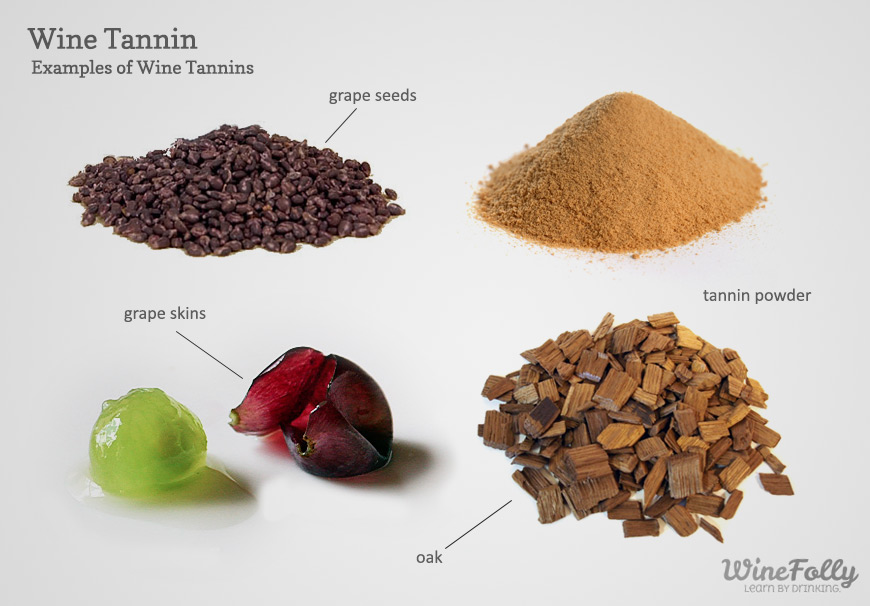
5. Tannin
Tannins are often blamed for red wine headaches, but they aren’t an established primary cause. Red wine will either have low, medium, or high tannin. Tannins can create a drying, puckering sensation and may contribute bitterness.
Too Much Tannin?
People vary in their sensitivity to bitterness and astringency, so high-tannin wines can feel more intense to some tasters than to others; especially supertasters.
6. Finish: Tart, Bitter, Sweet, Smoky
A wine’s finish is the combination of flavors and sensations that linger after you swallow, including fruit, spice, acidity, bitterness, or warmth. When it comes to fine wine, the finish is a deciding characteristic between an 85- and 90-point rating. As a personal skill, you might try paying attention to what you like about the finish on different wines, so you can describe the “yays” or the “nays” to your friendly local wine salesperson. A good wine steward will know exactly what you’re talking about.
7. Typicity a.k.a. Typicality
Typicity describes how well a wine expresses the characteristics associated with its grape variety, region, or style. Looking for wines with typicity can help you explore the grape varieties, styles and characteristics associated with a region. For example, compare a Malbec from Cahors in southwest France with one from Mendoza, Argentina, to explore how climate, growing conditions and winemaking influence the same grape variety.
8. Complexity a.k.a. Layered
One way to move beyond mass-produced wines is to look for complexity. A complex wine offers a range of aromas, flavors and structural elements that interact and may develop as the wine is tasted or exposed to air. Complexity doesn’t come easy, it takes high-quality grapes to make layered wines with a multitude of tastes. Fortunately, there are many affordable, complex wines, and all you have to do is ask for them.
9. Crowd-Pleaser
When all else fails and you need something that will satisfy, ask for a wine that’s sure to be a crowd-pleaser. This sounds odd, but there has emerged a pretty specific taste profile that’s universally loved by most in white and red wines. Crowd-pleasing wines often have approachable fruit flavors and balanced structure, although the best choice ultimately depends on the preferences of the people you’re serving.