

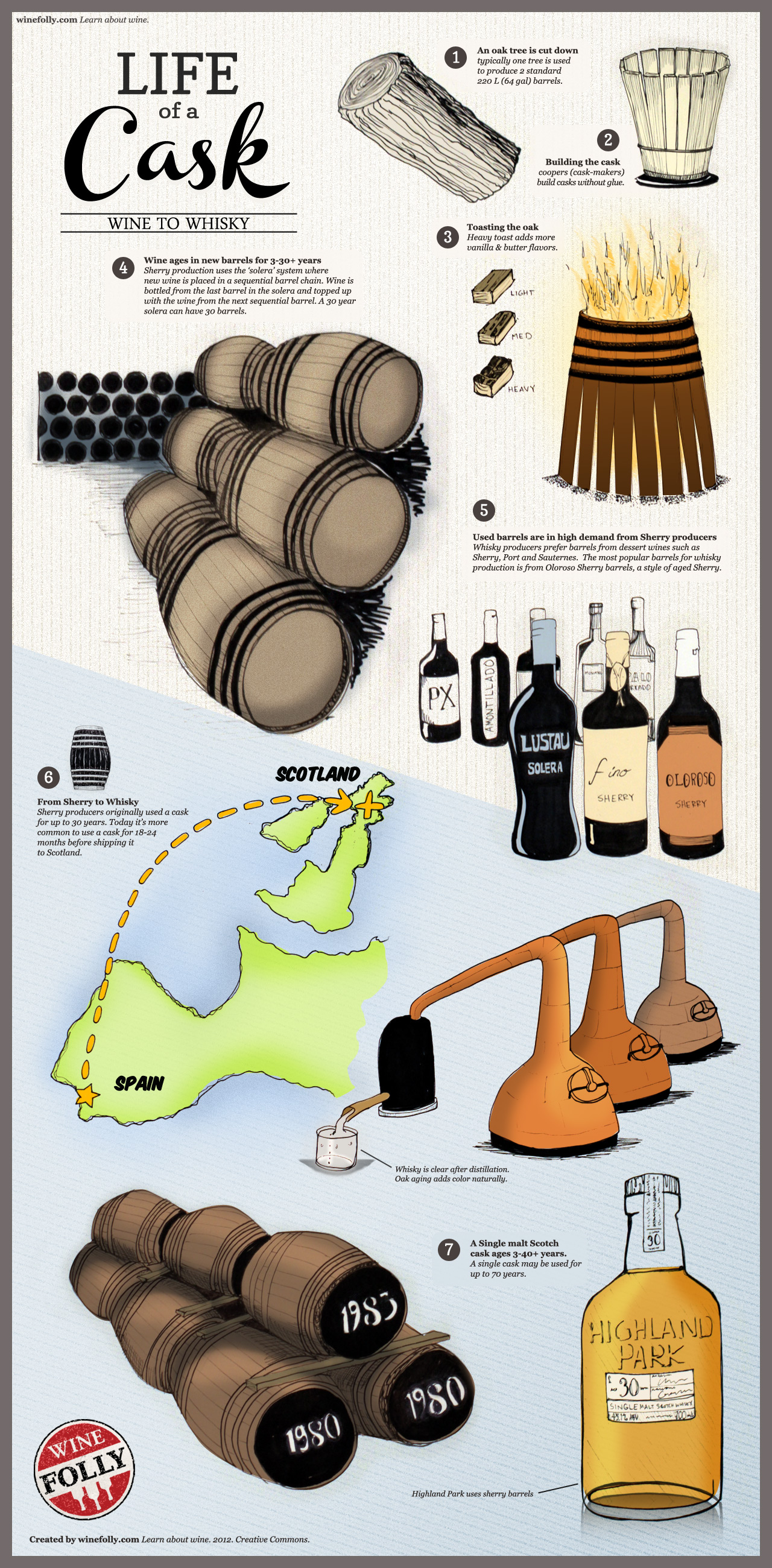
An infographic on the life of a cask, from wine to whiskey. Find out where casks start their life and see how Scotch is dependent on Sherry.
View Full Size Image (1280×2600)

Cask Facts
- Used wine barrels are in high demand for Scotch and whiskey production.
- Distilleries prefer Oloroso Sherry casks and other dessert wine casks such as Port and Sauternes for aging whiskey.
- Sherry producers use larger casks called Hogheads (250 L) and Butts (500 L).
- Some distilleries own forests in America where they source quercus alba (white oak) to produce casks.
- Distilleries often loan unused casks to Sherry producers to ‘season’ them.
The Life of a Cask From Wine to Whisky
- An oak tree is cut down. Typically one tree is used to produce 2 standard 220 L (64 gal) barrels. The most popular oak choices are French and American oak although Hungarian and Russian oak can also be found.
- Building the cask. Coopers (cask-makers) build casks without glue.
- Toasting the oak. Heavy toast adds more vanilla and butter flavors.
- Wine ages in new barrels for 3-30+ years. Sherry production uses the ‘solera’ system, where new wine is placed in a sequential barrel chain. Wine is bottled from the last barrel in the solera and topped with the wine from the next sequential barrel. A 30 year solera can have 30 barrels.
- Used barrels are in high demand from Sherry producers. Whiskey producers prefer barrels from dessert wines such as Sherry, Port, and Sauternes. The most popular barrels for whiskey production is from Oloroso Sherry barrels, a style of aged Sherry.
- From Sherry to Whiskey. Sherry producers originally used a cask for up to 30 years. Today it’s more common to use a cask for 18-24 months before shipping it to Scotland.
- A Single malt Scotch cask ages 3-40+ years. A single cask may be used for up to 70 years.