

The Mosel Valley is pure wine magic: twisty river, crazy-steep vineyards, and crisp, mouthwatering whites. Riesling leads the charge, but there’s more to explore.
Want to decode German wine labels, spot top vineyards, and impress your friends with your bottle picks? You’re in the right place. Let’s get into it.

The Mosel River begins in France, flows through Luxembourg and Germany, and joins the Rhine at Koblenz. Its winding course through Germany’s wine country is especially famous for steep vineyards and the most classic Riesling wines in the world.
So what makes the Mosel Valley so special for this wine and grape? It’s a combination of geology, geography, and history (the earliest record of Riesling in Germany dates back to 1435). Learn how to navigate the German classification system, the vintages, and what areas within the Mosel grow the best grapes.

Grapes of Mosel Valley
The Mosel Valley remains one of the world’s strongholds for white wine, with nearly 90% of its vineyards planted to white varieties. According to Wines of Germany, the region had 8,287 hectares (20,477 acres) under vine in 2025, down from about 8,800 in 2015.
Riesling still dominates, making up around 61% of plantings, but it’s not the only grape worth knowing. In addition, you’ll also find Elbling, Pinot Blanc, Pinot Gris, Kerner, and Auxerrois.
Pinot Noir and Chardonnay also make small but meaningful appearances, often destined for Sekt, German sparkling wine.
Mosel Riesling Tasting Notes
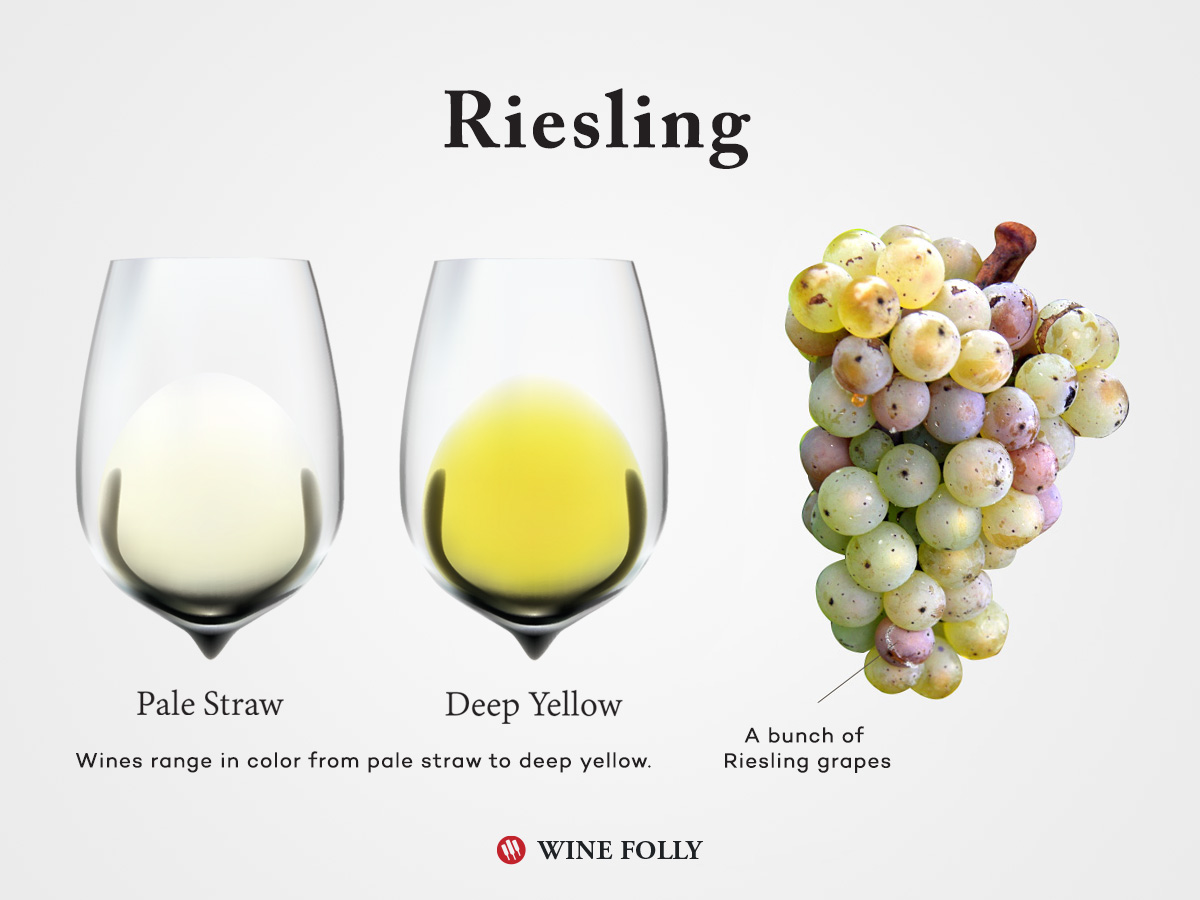
Mosel Riesling ranges from bone-dry to sweet, but its primary aromas and taste profile are distinct and easily identifiable. Mosel Riesling is an excellent choice for blind tasting.
- Color: Wines start out with a pale straw color and become deep yellow as they age.
- Aroma: Young wines have medium-intensity aromas of lime and honeydew, sometimes with slightly reductive smells of plastic or mineral notes. As wines age, they reveal high-intensity aromas of honey, apricot, Meyer lemon and gasoline (petroleum). The smell of petrol might be off-putting to some, but to others it’s a classic indicator of German Riesling.
- Taste: The structure of this wine is what makes it so intriguing. It has intensely high acidity, usually balanced with some level of sweetness. Dry Riesling can contain up to 9 g/L of residual sugar, depending on its acidity. Halbtrocken wines can contain up to 12 g/L, or up to 18 g/L under the relevant acidity rule. Wines with 30–40 g/L of residual sugar are generally medium-sweet, although high acidity can make them taste fresher and less sweet than the numbers suggest. The acidity lingers on the palate and tingles. Generally speaking, Mosel wines have low- to medium-low alcohol ranging from 7.5–11.5% ABV.
How long can it age? German Riesling is known to age well. A wine from a quality producer in a great vintage can last up to 40 years. Even modestly priced wines can age for five years and develop a deep golden hue, with aromatics of honey and petroleum.
Finding Great Mosel Wines by Classification

Classification is the first layer of identifying quality in German wine. Three terms are useful when navigating Mosel wine labels: Qualitätswein, Prädikatswein, and the VDP’s independent vineyard classification. The first two are legal wine categories in Germany, while the VDP system ranks vineyard origins through four tiers, from Gutswein to Grosse Lage.
Qualitätswein (QbA)
A wine produced in the Mosel region that meets a minimum ripeness level is a QbA. However, quality varies in this category, from bulk wines like Black Cat Riesling to decent-quality everyday Riesling wines sourced from all over the Mosel.

Prädikatswein
Prädikatswein classifications are based primarily on grape ripeness at harvest, measured by must weight. At the higher levels, selective harvesting and, in some cases, noble rot can contribute to the concentration and complexity of the wines. Because the region has traditionally been so cool, ripeness has been the primary factor in determining wine quality. Of course, as global warming continues and our demand for dry wine increases, we might see this change; however, for now, Prädikatswein is the most common designation you’ll find in the Mosel Valley. Here are the levels:
- Kabinett: Made from relatively early-picked, ripe grapes. These wines range from dry to delicately sweet and often have moderate alcohol.
- Spätlese: “Late Harvest” Wines that range from dry to sweet using riper grapes. Wines labeled ‘Trocken’ will be dry.
- Auslese: ““Select harvest.” Made from individually selected, particularly ripe grape bunches. Some wines include botrytized grapes, which can contribute honeyed, spicy and dried-fruit aromas. Styles range from dry to sweet.
- Beerenauslese (BA): “Select berry harvest.” Made from individually selected, very ripe berries, usually affected by noble rot. These wines are intensely concentrated and sweet.
- Trockenbeerenauslese (BTA): “Dry Berry Select Harvest” The most raisinated noble rot grapes are selected for the highest-end sweet wines of the region.
- Eiswein: Wines can only be labeled ice wine if the grapes naturally freeze and are harvested while frozen.
VDP (Verband Deutscher Prädikatsweingüter)
The VDP is an association of German wine estates that classifies wines by the quality of the vineyard. Specifically, wines are rated as Gutswein (regional wines) all the way up to Grosse Lage, which designates the very best vineyards of Germany. The VDP is an association of approximately 200 German wine estates. Its members use the VDP’s voluntary classification system to communicate vineyard origin and quality, with the VDP eagle commonly displayed on the bottle’s capsule.
Finding Great Mosel Wines by Vintage
Next, the second layer of finding great quality in the Mosel is knowing and respecting vintage variation. Very simply, cool-climate wine-growing regions like the Mosel Valley tend to be more susceptible to variable weather conditions. It’s possible that great producers will still make great wines in less favorable vintages, but bulk/value wines usually suffer.
As a general rule, great vintages offer amazing wines at all price points, whereas less impressive vintages (like 2016) require some discerning buying.
| Year | Rating | Notes |
|---|---|---|
| 2024 | 9 | Frost-hammered yields, but what’s left is concentrated and bright, just in tiny quantities. | 2023 | 9 | Juicy, spicy, and crowd-pleasing. Built for early drinking. | 2022 | 8 | Tricky growing season, but the results surprised: elegant and balanced with plenty of energy. | 2021 | 10 | Electric and precise, with thrilling acidity, low alcohol, and Riesling purity at its finest. One for the collectors. | 2020 | 7 | A lighter, cooler year with charm but less depth; great for casual drinking. |
| 2019 | 10 | Textbook vintage: vibrant acidity, perfect ripeness, and serious aging potential across styles. Stock up if you see it. |
| 2018 | 8 | Sunshine in a bottle: ripe, round, and fruit-forward wines that drink well young. |
| 2017 | 8 | A frost-bitten, low-yield year that delivered punchy, concentrated wines. |
| 2016 | 7+ | Tough vintage. Lots of rain and insect problems. |
| 2015 | 10 | Just freakin’ awesome. Please save some for me. |
| 2014 | 9 | A cooler vintage overall, leading to wines with more acidity. It could actually age quite well. |
| 2013 | 8 | Great producers did well, but others, not so much, mainly because of rain and rot problems. |
| 2012 | 7 | Really inconsistent grape bunch development meant only the fastidious producers made out. |
| 2011 | 9+ | A great vintage in the Mosel that was slightly ahead of schedule. Wines have awesome structure and depth. |
| 2010 | 8 | A challenging vintage for ripeness, but some producers expect these wines will last for decades. |
| 2009 | 9 | A long, warm vintage (well, warm for Mosel) that produced rich wines. |
| 2008 | 9 | Maybe not as good as the 2007s, a little more herbaceous and inconsistent, great producers are making age-worthy wines. |
| 2007 | 10 | Wow. Wow. If you can still get it, drink with glee. |
| 2006 | 7+ | This vintage started out awesome, but it didn’t end so well. |
- 10: Buy without limit and cellar (if only budget wasn’t a limit!).
- 9: I would buy and drink, and buy again, and drink again.
- 8: Buy and not take too seriously unless it was from a favorite producer.
- 7: I would be very, very picky with my producer choice. Basically, if you’re a pro, you know how great an unloved vintage can be.

Finding Great Mosel Wines by Sub-Region
Finally, the third layer of finding great quality Mosel wines is understanding the region. Not all of the vineyards here are created equal. The northern latitude (Mosel lies near the 50th parallel north) means longer days during the growing season, but only certain vineyards are situated to receive these sunshine hours.
There are over 500 named vineyard sites in the Mosel Valley, so unless you’re doing your master’s thesis on the region, it would be a great challenge to memorize them all! Instead, here’s some logic on how to locate where the best vineyards are found:
South-facing slopes generally receive more direct sunlight than north-facing slopes, helping grapes ripen in the Mosel’s cool climate. Slope angle and surrounding topography also affect solar exposure. Also, vineyards located on slopes receive even more sunlight exposure than the flatlands. It’s no wonder, then, that 40% of the vineyard acres in the Mosel are located on steep slopes (at or over a 30% pitch), and the best vineyards typically face south.
Calmont, near Bremm, is considered Europe’s steepest vineyard, with slopes reaching approximately 68 degrees.

What to Look for on the Label

- Producer: This will give you a general impression of the winemaking quality and producer size.
- Village Name: The village/commune will be mentioned first, usually appended with “er” indicating that it’s that particular village’s vineyard. The reason for this is that there are a lot of vineyards called “Würzgarten” (spice garden), “Sonnenuhr” (sundial), “Rosenberg” (rose hill) and “Honigberg” (honey hill).
- Vineyard Name: Want to find the exact vineyard location? We found a great map on Wines of Germany’s website. First, find the city, then zoom in and you’ll see the vineyard names pop up.
- Sub-Region: The six sub-regions of Mosel all offer different expressions of Riesling. While the most planted sub-region of Bernkastel attracts the most attention, the other regions, including Saar and Ruwertal, make great wines as well.

Finding Great Mosel Wines by Soil Type
There are two primary types of slate soils found in the Mosel Valley: blue slate and red slate. Although both soils are relatively poor, the red soil areas generally have more clay, producing a richer, more lush style of Riesling, whereas blue slate wines are generally more floral.
The slate soils offer a few unique benefits to wine growing in the Mosel. First, the vineyards in the Mosel are well-drained, which is good during wet growing seasons. Second, the slates hold heat, which can be beneficial on cool vintages.
Finally, the region’s soils influence vine growth and water availability, while microbial communities can affect fermentation. The precise relationship between vineyard geology and the mineral character perceived in the finished wine remains complex.
The geology of the region dates back to the Devonian Period (the Paleozoic Era leading into the 4th major extinction event) when the Mosel area was once an ocean and deposits settled on the sea floor, forming sediment layers as thick as a mile. Over time, the pressure of two supercontinents joining to create Pangea (Gondwana and Laurasia/Euramerica) compressed the sea floor, which metamorphosed into slate.
The marine sediments were later compressed, folded and metamorphosed during the Variscan Orogeny, a major mountain-building event in the late Paleozoic that helped form the slate-rich landscapes of the Mosel region. The Rhenish Mountains, as they are now called, were carved out by the Mosel River, revealing this geological history. The slate soils here are very poor for most agricultural purposes (they’re hard to farm!), but in the case of wine growing, they produce more structured and concentrated wines.
Last Word
The Mosel Valley is stunningly beautiful. And, since only one-third of the wine is exported, it’s well worth visiting.