

Rosé is made from red grapes, but unlike red wine, the skins remain in contact with the juice for only a short time. This brief skin contact gives rosé its pink color while preserving the freshness and acidity often associated with white wine.
The result is a broad category of wines that range from pale and citrus-driven to deeply colored and intensely fruity.
Nearly any red-skinned grape variety can produce rosé, from Cabernet Sauvignon and Syrah to Grenache, Mourvèdre, Pinot Noir, and Sangiovese. Still, certain varieties and styles are more commonly chosen for their flavor and character.

Tasting Rosé Wine
Rosé typically offers flavors of red fruit, flowers, citrus, and melon, often with a refreshing, slightly green note on the finish — think celery or rhubarb. The grape variety plays a big role in shaping the wine’s final taste.
For example, a deeply colored Aglianico rosato from Southern Italy often shows sour cherry, blood orange, and dried herb notes.
Meanwhile, a pale Grenache-based Provence rosé may show watermelon, citrus peel, white flowers, and subtle herbal notes.

How Is Rosé Wine Made?
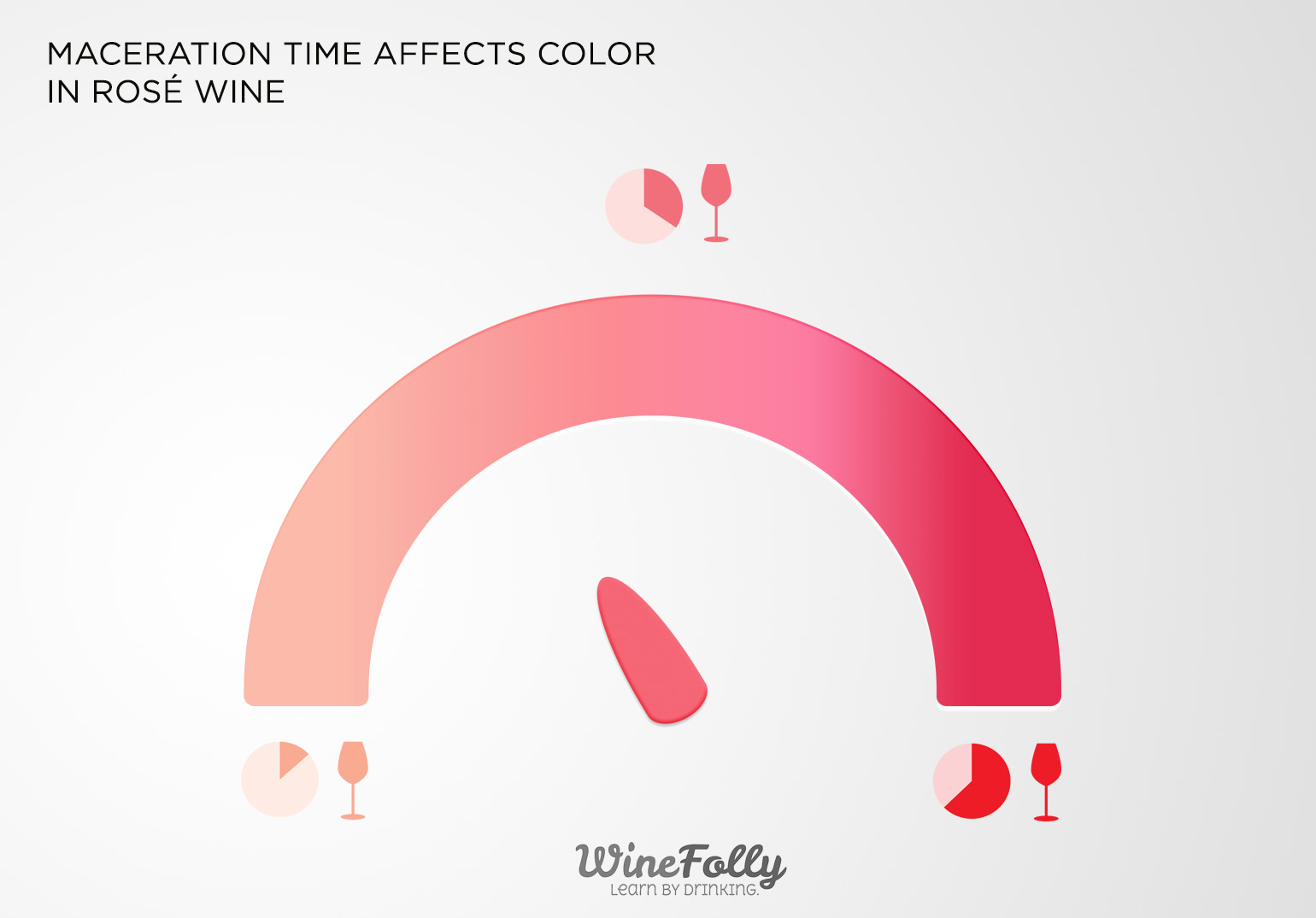
There are three primary ways to make rosé wine. The most common method is maceration, as illustrated in the graphic above.
Maceration Method
This technique involves letting red grapes sit, or macerate, in their juice for a period. Afterward, the juice is fermented into rosé. This method allows winemakers to control color and flavor intensity through skin-contact time.
Maceration is especially popular in regions like Provence and Languedoc-Roussillon, France, where pink wine is just as significant as red or white.
TIP: Most rosé wines spend between 2–24 hours on their skins, though some producers extend or shorten contact depending on the desired style.

Saignée or “Bled” Method
In this approach, winemakers “bleed off” a portion of juice shortly after crushing the grapes and during the early stages of maceration. The removed juice is fermented separately as rosé, while the remaining red wine becomes more concentrated.
Saignée rosés are relatively uncommon and typically produced in smaller quantities than dedicated rosé programs. You’ll find this method used in regions known for premium red wines, like Napa and Sonoma.
Blending Method
This approach involves mixing a small amount of red wine into a vat of white wine to create rosé. It doesn’t take much, usually no more than 5%, to give the wine a pink hue.
While uncommon in still rosé wines, blending is widely used in sparkling wine production, particularly in Champagne, where it is a traditional and legally permitted method.
Many rosé Champagnes are produced this way, including examples from houses such as Ruinart, where still red Pinot Noir contributes both color and structure.