

Big reds, sun-baked vineyards, and a whole lot of grapes: Châteauneuf-du-Pape wine has all the makings of a classic. But there’s more to the story than big reds. From its unusual mix of grape varieties to its distinctive stony soils, Châteauneuf-du-Pape has plenty to unpack. Let’s get into it.

What Type of Wine is Châteauneuf-du-Pape?
Châteauneuf-du-Pape is a French wine appellation known for its bold Grenache-based red blends. Officially, the region makes both red and white wines with up to 13 different grapes. (Unofficially, producers play with up to 20 varieties in their blends.)
Let’s dig into the details of this historic wine and find out why Châteauneuf-du-Pape is the Southern Rhône’s most exclusive appellation.

Tasting Châteauneuf-du-Pape
A great bottle of Châteauneuf-du-Pape Rouge bursts with rich raspberry and plummy fruit flavors. As it evolves, you’ll taste notes of dusted leather, game, and herbs. The French call this herbal play “garrigue,” after the region’s scrubland of sage, rosemary, and lavender.
As if that wasn’t enough, Châteauneuf-du-Pape Rouge often finishes on a sweet, strawberry-like tingle that glows in the back of your throat from its elevated alcohol. The finish ranges from sweet to savory, depending on the vintage.

Serving Châteauneuf-du-Pape Rouge
Serving: Decant wines for about one hour; less for older vintages. Serve cool, below room temperature, to slow the evaporation of alcohol at around 60–65 ºF / 16–18 ºC.
Aging: Red wines typically age 10–20 years, depending on producer, vintage, and style. White wines age up to about 10 years.
Food Pairing: Try this wine with roasted and spiced vegetable-forward dishes and richly spiced preparations like Moroccan chicken tagine with olives, lamb dolma (Turkish lamb-stuffed peppers), or smoky cauliflower steaks.
Châteauneuf-du-Pape Vintage Chart
- 2024 Good. Despite a rainy spring, favorable summer conditions should produce quality wines.
- 2023 Okay. An August heatwave caused many producers to pick early, which could mean rigorous tannins.
- 2022 Good. An extremely dry vintage resulted in lower yields and concentrated, freshly acidic wines.
- 2021 Okay. A variable vintage across producers, seek quality.
- 2020 Exceptional. It ended up being a hallmark year throughout Europe.
- 2019 Good. This was a big, fat, generous year. Expect ripe fruit notes and lower acidity in white wines.
- 2018 Good. A rainy, cooler year.
- 2017 Good. Smallest vintage in 40 years (only 9.6 million bottles). Extremely difficult harvest due to drought.
- 2016 Exceptional. Happy grapes, good wines.
- 2015 Good. This was a bombastic, fruity vintage. Less herbal and bitter tannins overall. Great drinking wines.
- 2014 Okay. This was a tricky vintage, requiring a lot of work in the vineyards. Look for quality producers; these should age.
- 2013 Okay. Reduced yields from cooler temperatures throughout the season. Look for quality producers; these will age.
- 2012 Good. Average yields and late-season rains caused some more bitter tannins. Still, increased acid levels suggest ageability.
- 2011 Exceptional, high-yield vintage. Concentrated, dense, fruity wines.
What About the Blanc?
Châteauneuf-du-Pape Blanc is harder to find because only about 7% of the region’s vineyards are white grapes. Still, you’ll find many producers make small amounts that are usually a blend of the region’s white grapes, most notably, Grenache Blanc, Clairette, and Roussanne.

Where Is This Place?
Châteauneuf-du-Pape sits towards the bottom of the Rhône Valley, close to the border of Provence. The name means “pope’s new castle,” and refers to a time when the seat of the Roman Catholic Church was in Avignon (between 1309–1377). Written records of vineyards in the region date back to the 1100s, but the history of winemaking here is even older!
Châteauneuf-du-Pape is one of 18 crus of the Côtes du Rhône wine region. If you didn’t already know, these crus represent Côtes du Rhône’s top wine-growing zones.
Châteauneuf-du-Pape is considered by most to be the benchmark of the Southern Rhône.
Châteauneuf-du-Pape Wine Facts
- Châteauneuf-du-Pape was the very first French wine appellation; created in 1936.
- There are 320 wine growers in the Châteauneuf-du-Pape winegrowers’ association.
- TThe appellation covers approximately 3,150 hectares of vineyards and produces around 12 million bottles annually.
- Nearly 75% of the vineyards are dedicated to Grenache.
- Approximately 35% of the appellation’s vineyard area is farmed organically or biodynamically.
- Châteauneuf-du-Pape is made up of five communes: Châteauneuf-du-Pape, Courthézon, Orange, Bédarrides, and Sorgues (ordered from largest to smallest).
Châteauneuf-du-Pape Terroir
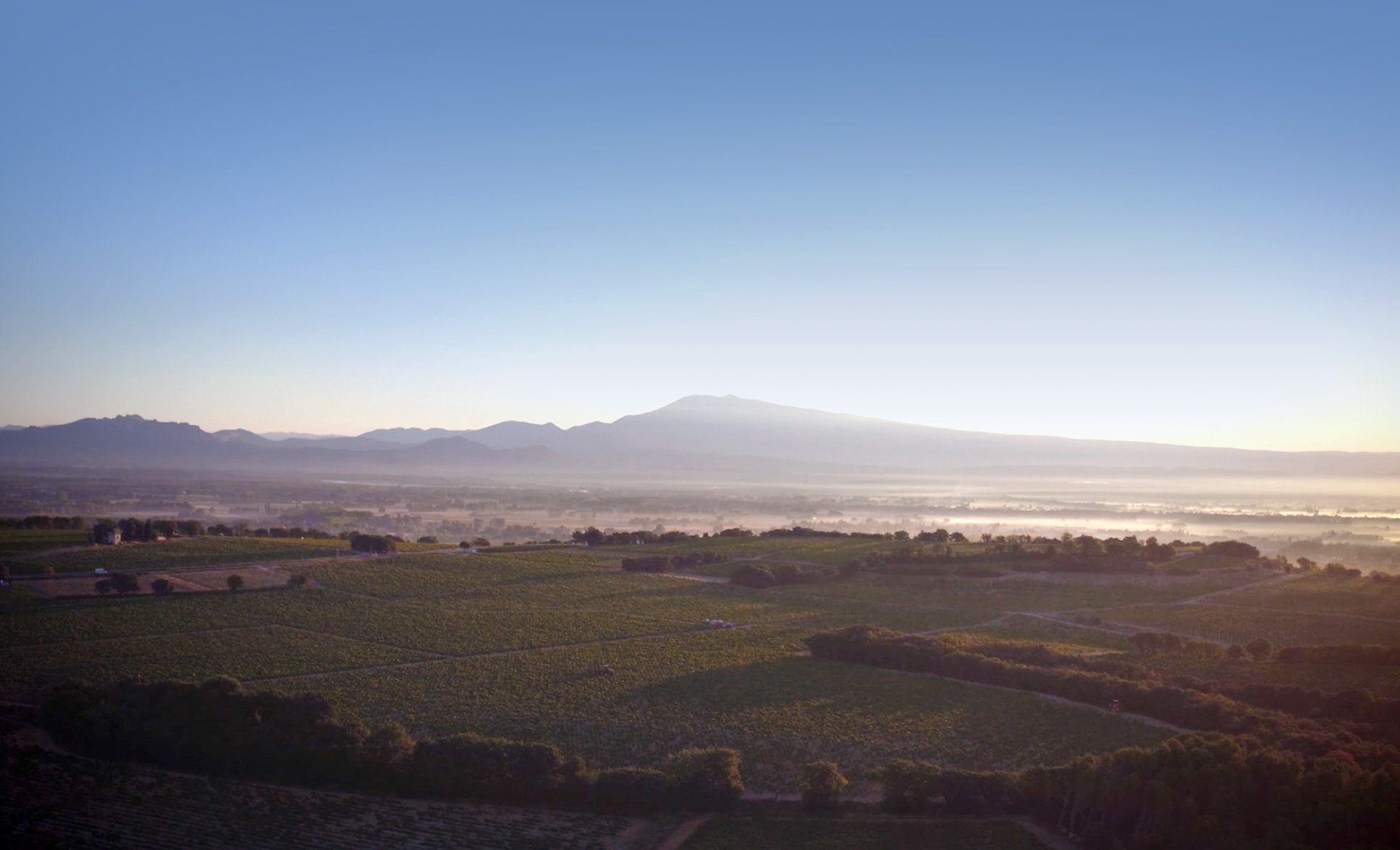
From an outsider’s perspective, Châteauneuf-du-Pape is nothing more than a plateau and a few low, undulating hills that slink into the Rhône River. But to the expert, the region is a complex mix of soils, subtle slopes, and micro-terroirs that define the appellation’s best wines.
- Soils: Three of the appellation’s best-known soil types include galets roulés (rounded stones over sandy, iron-rich red clay), safres (sand-dominant soils), and éclats calcaires (more chalky-colored, limestone-rich clays). More robust wines with higher tannin tend to come from the clay-based soils. More aromatic and elegant wines tend to grow on the soils with a higher prevalence of sand.
- Sunshine: Châteauneuf-du-Pape receives approximately 2,800 hours of sunshine annually, making it one of the sunniest regions in France. (This is as sunny as Los Angeles!).
- La Crau Plateau: The La Crau Plateau is particularly famous for its large rounded stones, deposited by ancient rivers during the Villafranchian period. These galets cover iron-rich red clay soils.
Winemakers here combine classical techniques with modern sanitation practices. You’ll find there are some stylistic differences between producers, which are achieved through winemaking techniques.

Handling Grenache in the Winery
Traditionally, Grenache bunches aren’t destemmed (they go into the fermenter whole). Leaving stems adds some bitterness, but it also increases age-worthiness. You’ll find that some producers do partial or full destemming, especially in tough vintages, to make a softer, fruitier wine. (Be sure to look for this in winemaking notes!).
Winemaking: Oak vs. No Oak?
The region uses concrete vats to ferment wines, and you’ll also see a lot of stainless steel vats. Producers commonly use temperature-controlled concrete and stainless steel vats to manage fermentation temperatures. A few opt for oak barrel fermenters, although this isn’t as common.
During élevage (“aging”), some producers use new oak, but this is often for varieties other than Grenache. Truthfully, Grenache is capable of producing a lovely, rich wine without the need for new barrels. That being said, you can expect wines aged in new oak to have even more smoky, sweet, clove-like notes and will often include bolder varieties like Syrah and Mourvèdre.
Winemakers carry out malolactic fermentation on nearly all red wines, while most white wines skip this process.