

Wine tourism is booming, and there are more ways than ever to experience wine country. From luxury tastings in Napa Valley to family-run wineries in emerging regions, the challenge isn’t finding options; it’s deciding where to spend your time. However, you’ll find that most of these options are a bit extraneous and nearly impossible to pull off in one trip.
Here’s how to plan a wine tasting trip that helps you understand a region.
Choosing Your Travel Companion

The most important part of planning your wine tasting trip is your traveling companion. Who you travel with will influence almost every decision you make on the trip.
There are really only 2 types of traveling companions:
- Travelers who enjoy taking their time and are particular
- Travelers who move fast and are willing to improvise or explore
If you’re in a position where this choice isn’t up to you, well, there are some clever ways to make everyone happy and still get what you want. If you know you’re a Type 2 traveler (a go-getter), practice patience with your travel partners and plan sections of your trip where you can be alone to explore what you want. If you’re a Type 1, plan to have a nice home base so you can bow out of things and still have a great time.
What to Expect When Going Wine Tasting
- Plan for 2–3 winery visits per day. That leaves enough time to enjoy the wines, ask questions, and explore the region between tastings.
- Many wineries require reservations, particularly for premium tasting experiences (at least a day or two in advance).
- Some highly sought-after wineries offer limited access, private appointments, or member-only experiences.
- Some wineries credit all or part of your tasting fee toward a wine purchase.
- Wine trade professionals may qualify for complimentary tastings, but policies vary widely and usually require advance arrangements.
- Pack a cooler or insulated wine boxes to keep your wine purchases from cooking in the car.
How to Hit More Than 3 Wineries in a Day:
If you want to rally and visit more than three wineries a day, you have two options:
- Visit during a regional wine event so you can try lots of wines in one location
- Start planning your trip like a professional. BTW, professionals travel more like a type 2 traveler…
How Do Wine Pros Travel?
When sommeliers and other wine professionals visit a region, it’s not uncommon to have a very aggressive schedule. A wine professional might visit 5–6 wineries in a day, focusing on producer meetings and tastings rather than full tours. Also, they never swallow (they spit their wine to stay sharp). They often spend as much time studying the landscape as they do tasting wine. To them, understanding the vineyards, elevations, soils, exposures, and climate is just as important as tasting wine.
A professional schedule can be grueling, so pack water, snacks, sunscreen, layers, and comfortable shoes. Long tasting days often involve a surprising amount of driving and walking.
- Set up tastings at least two weeks in advance. Plan for at least two full days in each area, with the goal of visiting one important winery each day, sandwiched between smaller tasting-only visits.
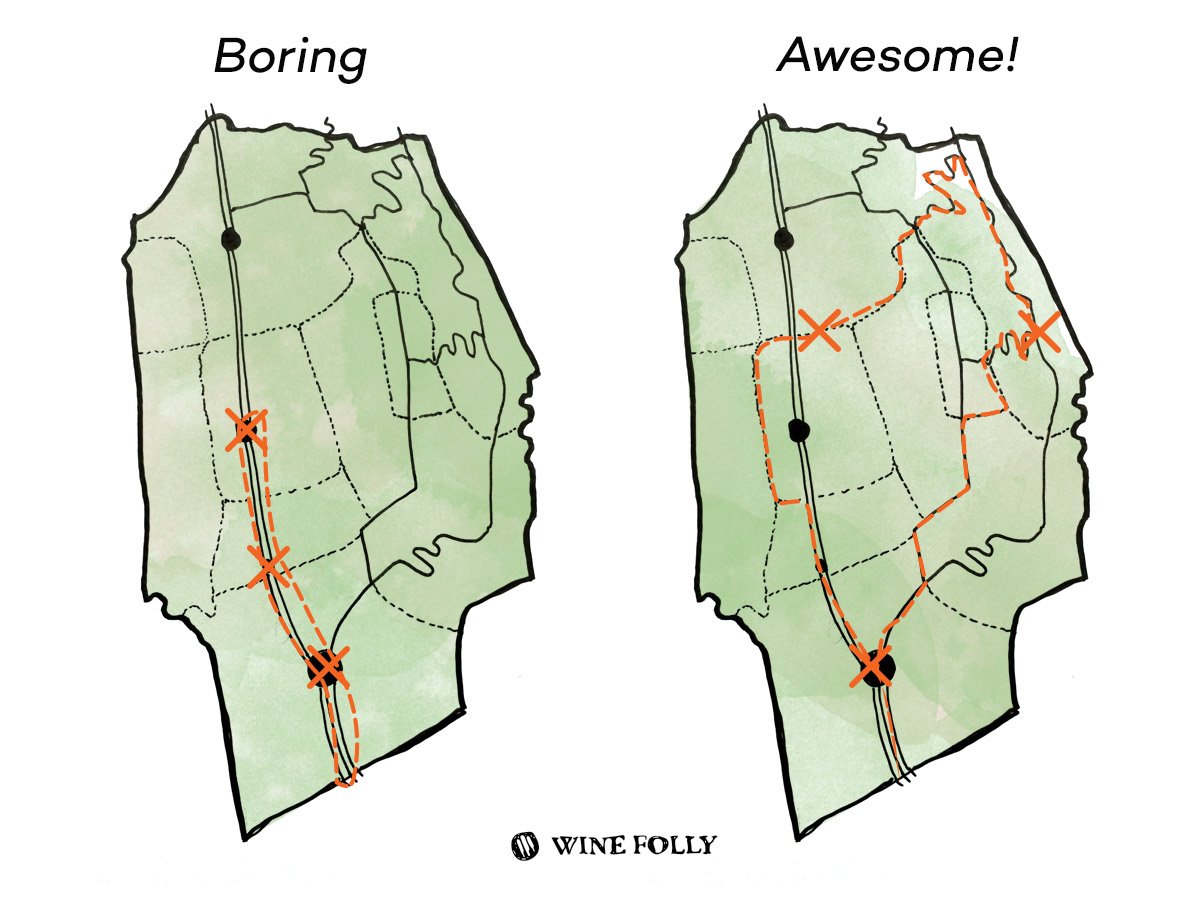
- Organize your travel to minimize doubling back and start early (double-check opening times) to hit the farthest winery first and finish close to your evening destination.
- Practice swirling and spitting — you’ll look like a pro, and tasting staff will respect you when they see this.
- If you want to walk in a vineyard, ask beforehand; many vineyards have uneven terrain, insects, or seasonal hazards, so it’s worth dressing appropriately.
- If you’re visiting professionally, bring a business card or digital contact card.
- Save your drinking and indulging for dinnertime.
- Remember to set your morning alarm.
- Don’t forget that we warned you it won’t be easy. You can do this!
How to Pick Where to Go Wine Tasting
Where are you going? What is the weather like? Which grapes and wine styles define the region? What is the terrain like? How touristy is it? How big is it? These are some of the questions you should ask yourself to narrow down where to go.
Despite the fact that wineries will tell you that they do everything great, this is rarely the case. Most wine regions are known for a handful of signature grapes or wine styles shaped by their climate, soils, and history. For example, if you go to Rioja, be prepared to drink a lot of Tempranillo and eat more than your fair share of white asparagus. In Napa Valley, Cabernet Sauvignon dominates conversations because it remains the region’s flagship wine.
Here are our best tips on finding the right places to go:
- Look for estate wineries that grow at least some of their own fruit. They’re often able to share firsthand insight into the vineyards and growing season.
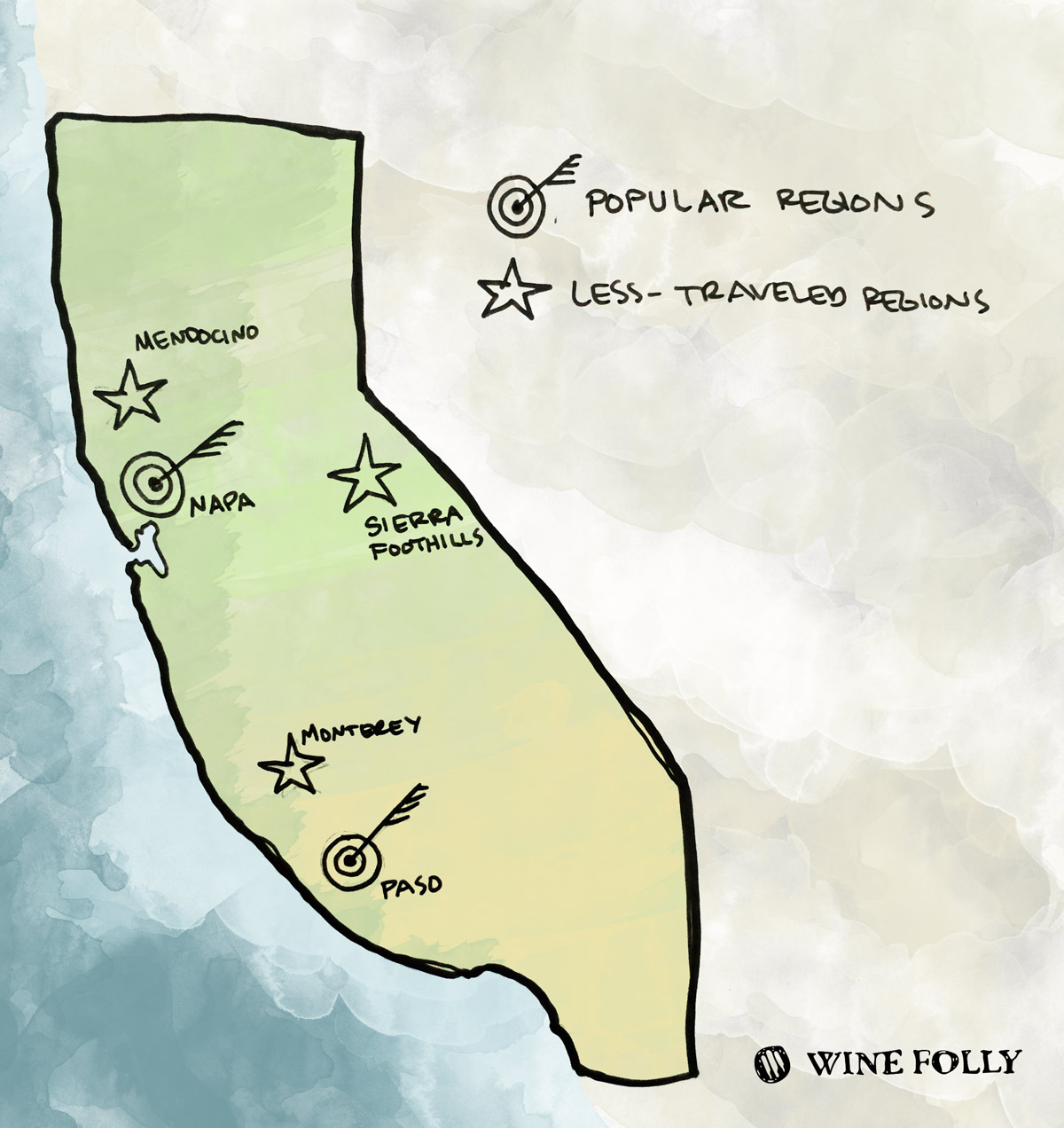
- Explore wineries beyond the main tourist routes. You’ll often encounter different vineyard sites, unique perspectives, and fewer crowds.
- You only need to go on 2–3 winery tours to gain a solid understanding of the winemaking process, so pick a winery tour that’s led by the winemaker or winemaker’s assistant. Winemakers and cellar teams often provide some of the most insightful conversations you’ll have during a trip.
If you just need to get the lay of the land, many wine regions maintain official tourism or regional wine association websites with maps, producer directories, and educational resources.
A Few Notes on Accommodation
Most wine travelers fall somewhere between two approaches:
- Stay somewhere where the accommodation is a large part of the experience.
- Sleep and shower as cheaply as possible to save your resources for other aspects of your trip (e.g. wine).
The best way to choose your accommodation is to think about your travel companion. If they prefer a higher level of comfort, pick a place that’s a joy to visit and plan a spa day for them while you go adventuring on your own.
Camping? Keep in mind that wine tasting often involves early starts, long drives, and dusty vineyard roads, so access to a shower and a comfortable bed can make a big difference.