

Learn where wine flavors come from, how to smell them, and what flavors to expect in Cabernet, Shiraz, Pinot Noir, Chardonnay, and Sauvignon Blanc.
Understanding the flavors in wine starts with a seemingly simple question:
Where Do Wine Flavors Come From?
Imagine yourself the size of a single atom floating on the surface of a wine. Zoom in far enough and the wine’s surface is constantly shifting.
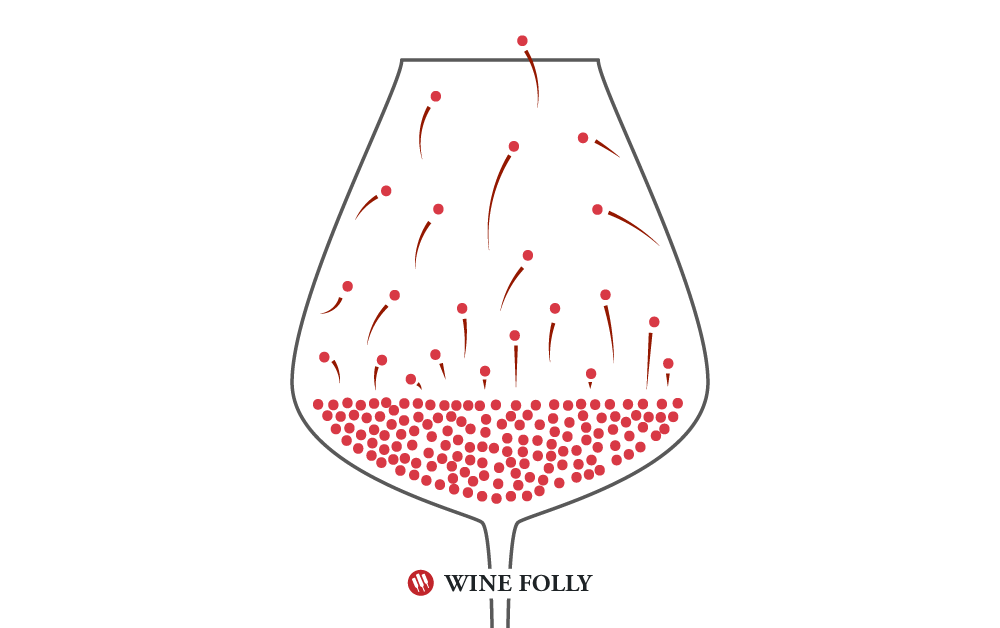
As ethanol evaporates, it lifts aroma compounds into the air above your glass. These compounds travel into our noses and give wine its many flavors.
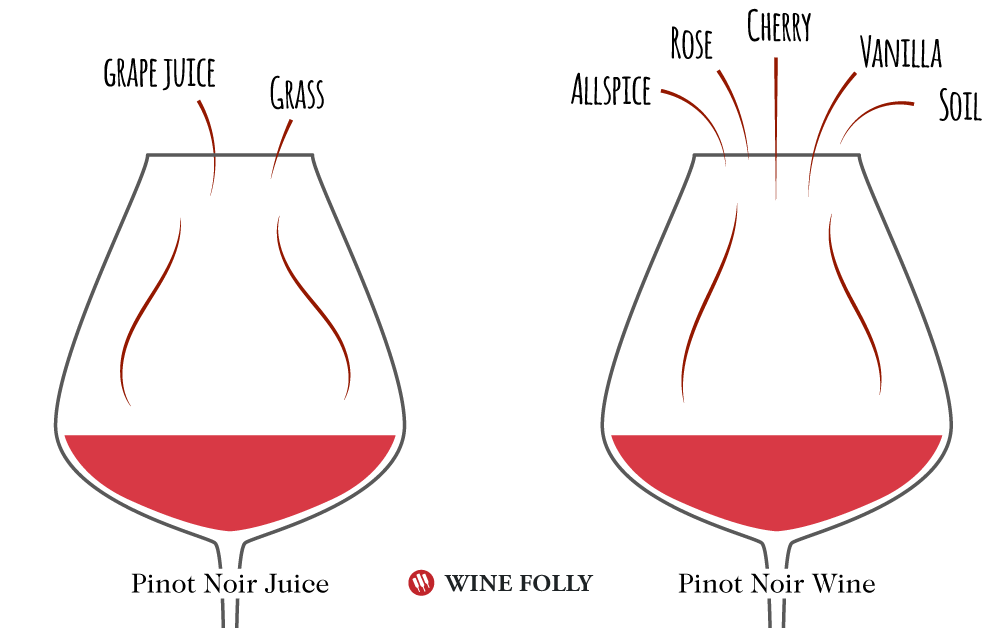
So why does Pinot Noir juice smell nothing like the finished wine?
Wine flavors are created by chemical reactions during fermentation (when yeast turns sugar into alcohol). Fermentation builds wine flavor as yeast converts sugar into alcohol and produces hundreds of aroma compounds.
How Come Some Wines Smell Like Cherries?
Some wine aromas share the same molecules found in everyday foods like cherries and baked fruit. When you smell cherry in wine, you’re detecting aroma compounds that also appear in foods like cherry pie. (Egads, now I’m hungry!)
Here are common wine flavors by category:
FRUIT
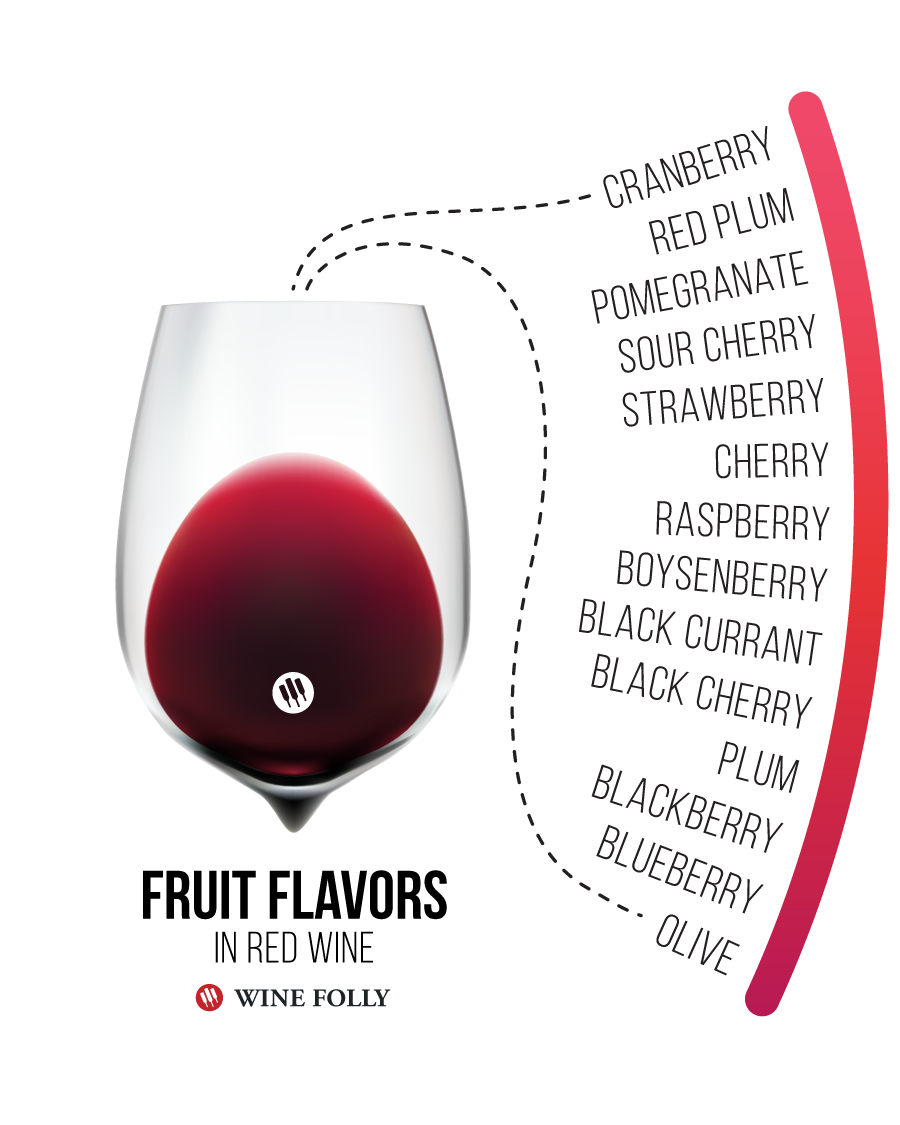
Red wines often show berry, cherry, and plum notes.
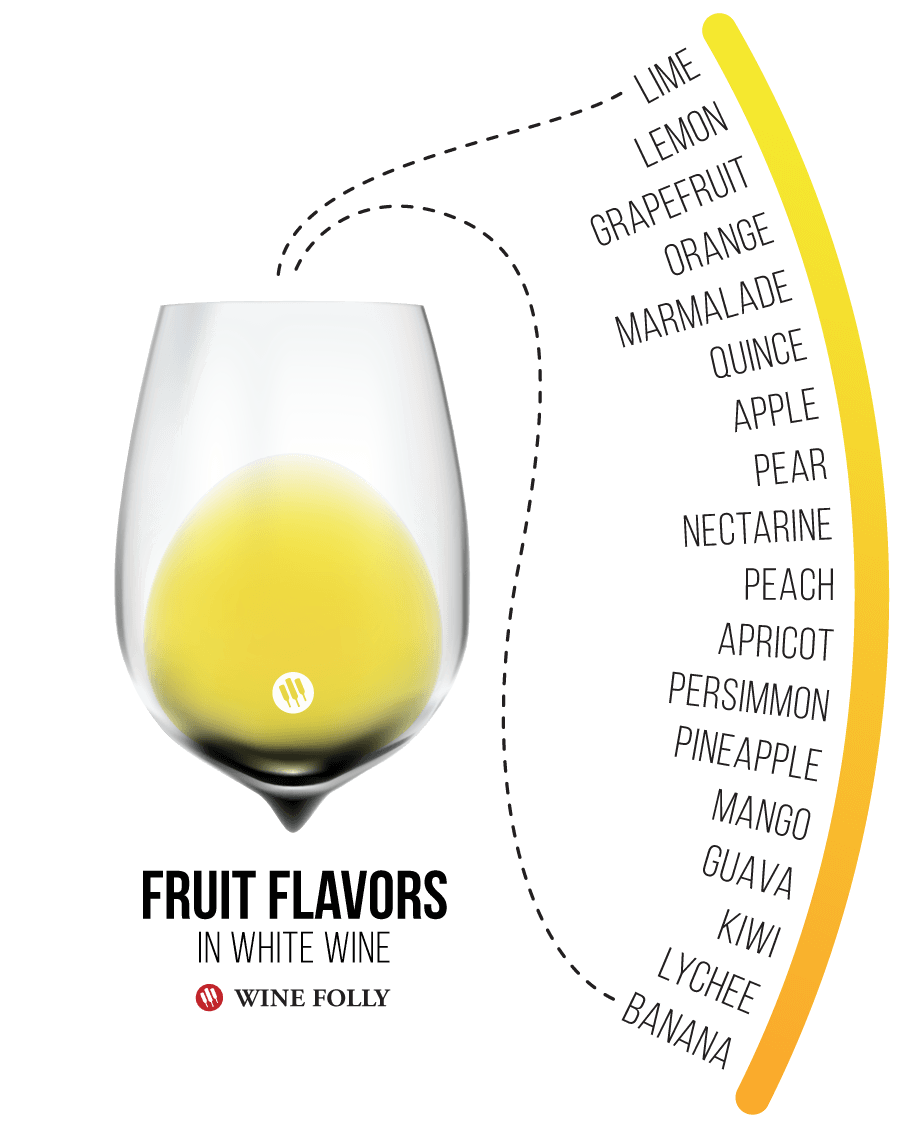
White wines lean toward citrus, tree fruit, and melon.
FLOWER / HERB
Both red and white wines can have subtle (or not-so-subtle) aromas of fresh flowers, roses, green herbs, leaves, green vegetables, and/or stems.
OTHER
Some wines smell like cheese, bread, milk, butter, bacon fat, petrol, nail polish, potting soil, or petrichor (smells like freshly wetted asphalt in the summer – side note: I’m addicted to this smell…).
AGING / OAK
Some aromas come from oak aging or barrel influence and include vanilla, baking spices, pie crust, caramel, Maillard-related aromas (from toasted oak barrels), tobacco, cedar, coffee, leather, creosote, and chocolate.
Cabernet Sauvignon Flavors
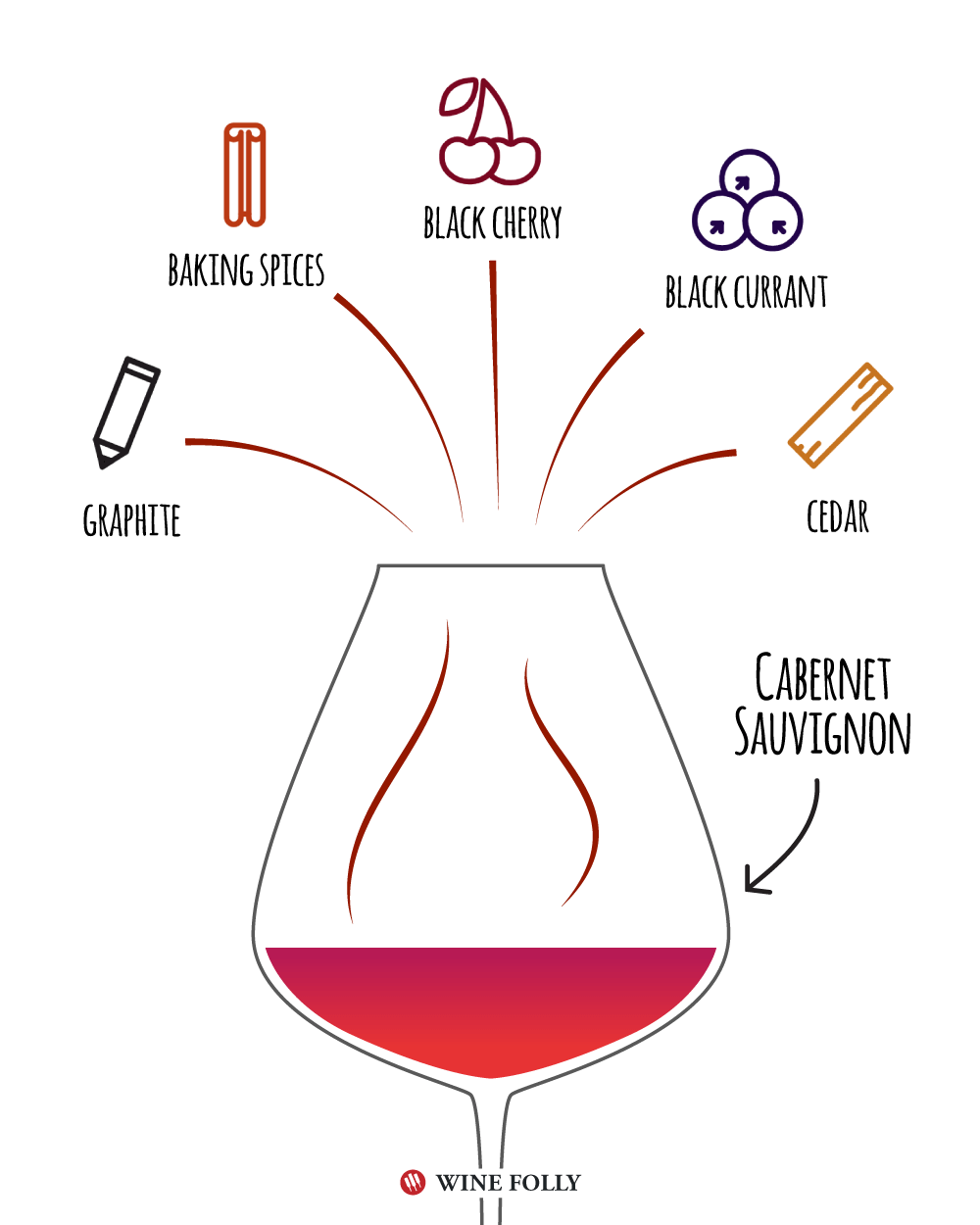
Read more about Cabernet Sauvignon.
Shiraz Flavors
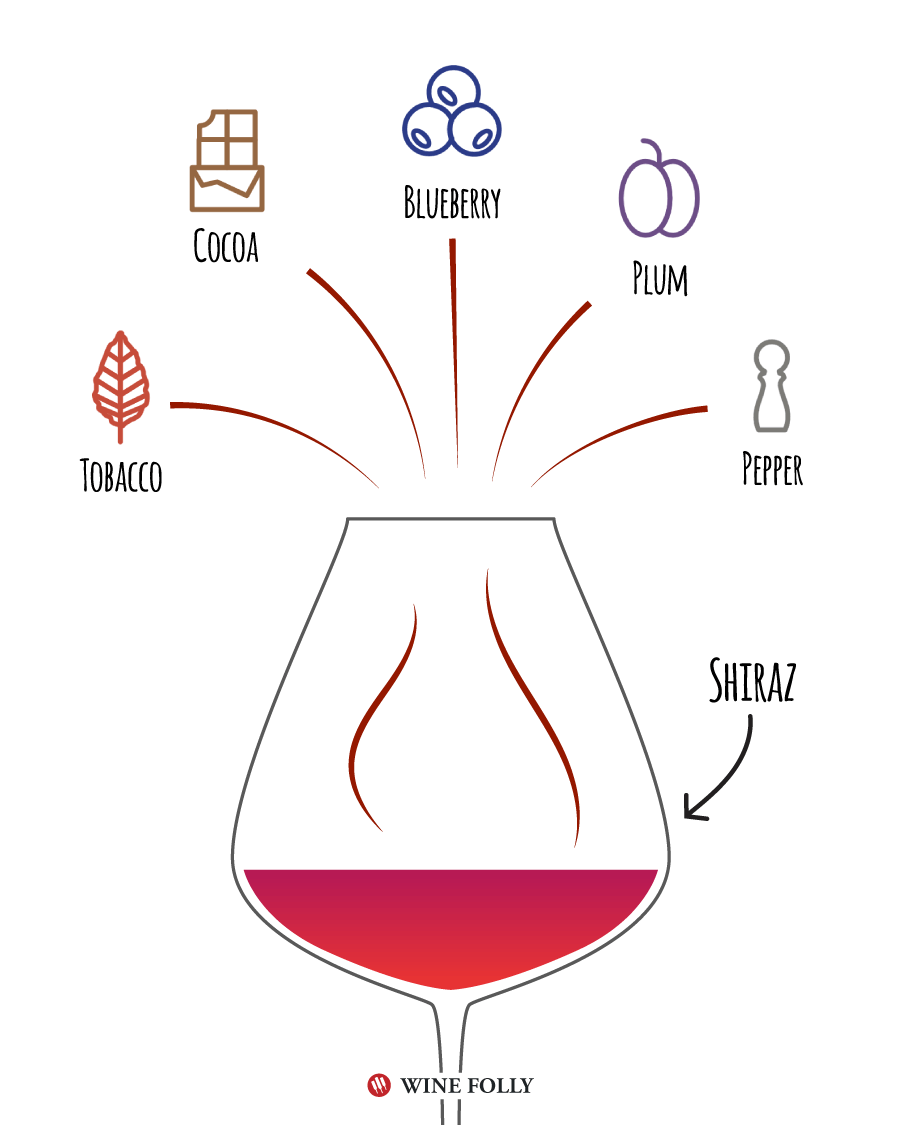
Read more about Shiraz.
Chardonnay Flavors
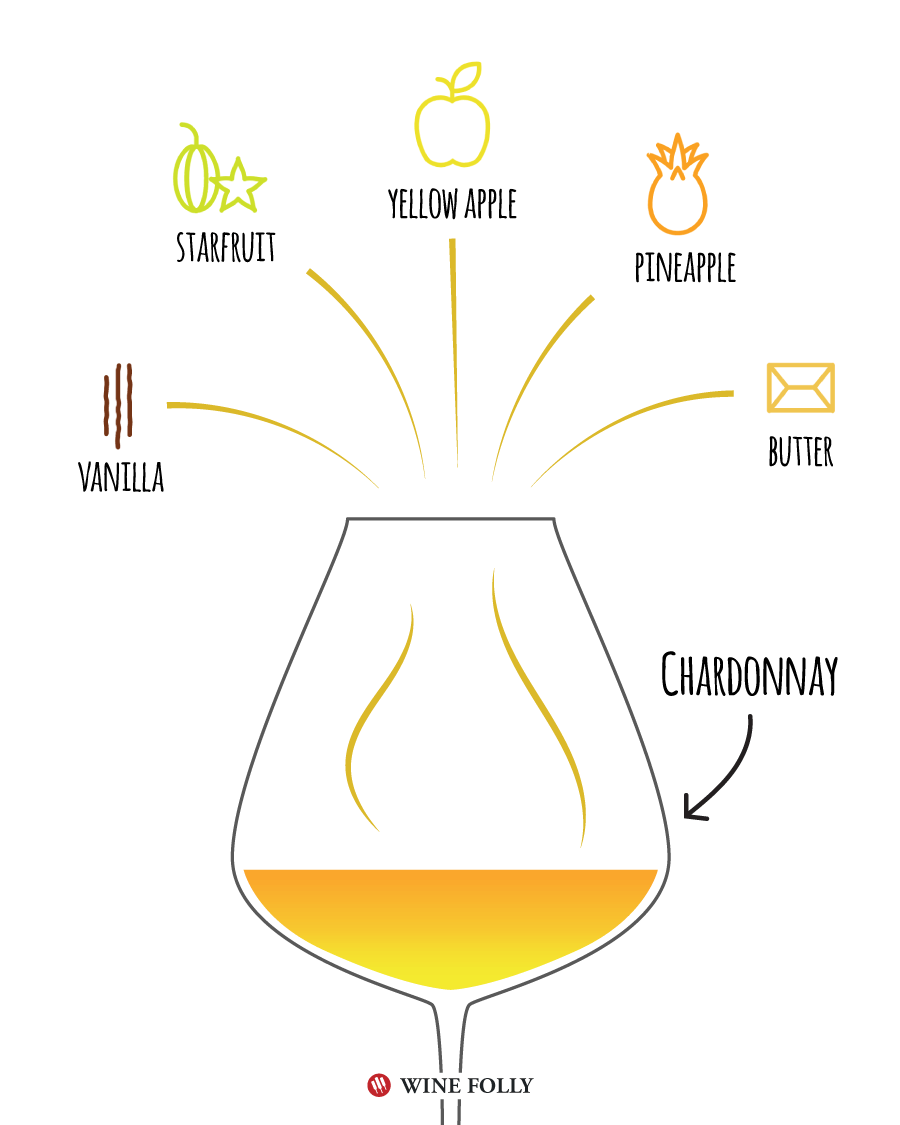
Read more about Chardonnay.
Sauvignon Blanc Flavors
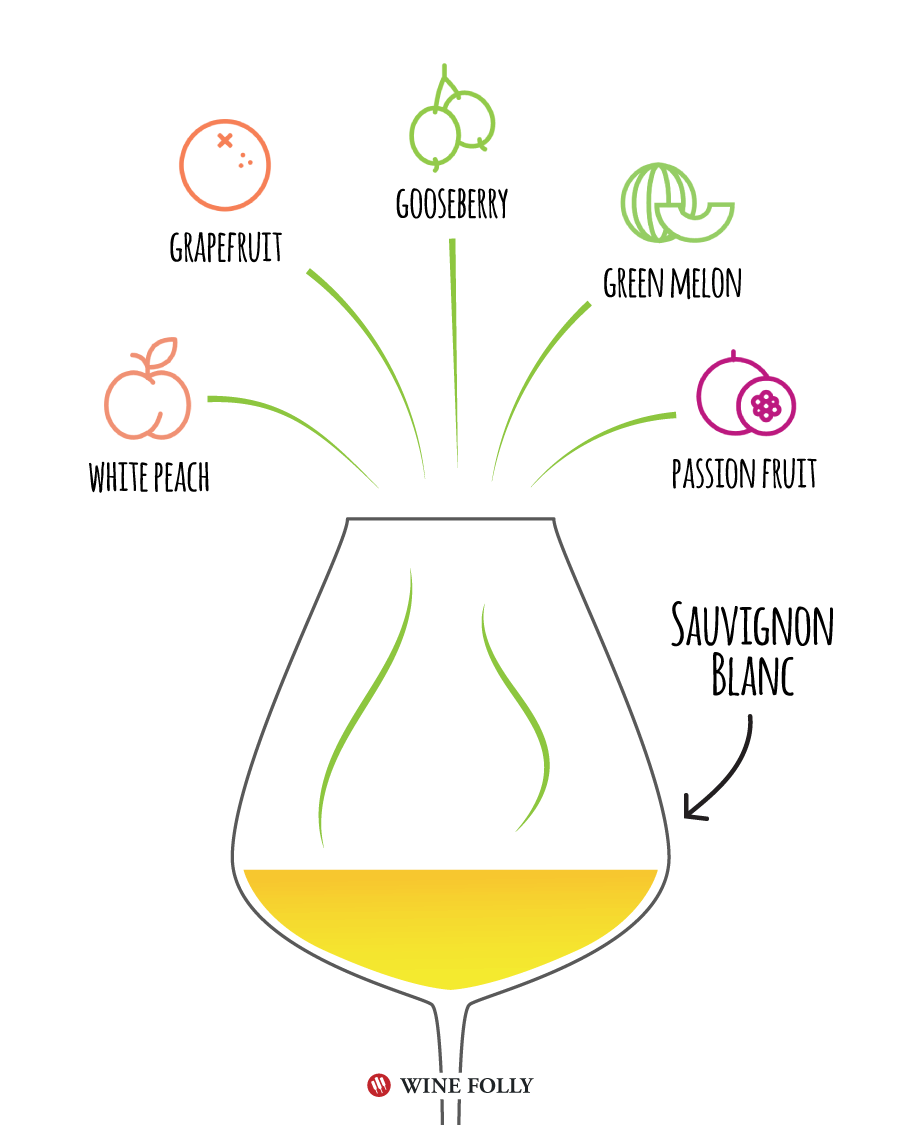
Read more about Sauvignon Blanc.
If I Smell Cherries and You Smell Pepper, Who’s Right?
Look at your nose. Now imagine (or look at) someone else’s nose. (Don’t stare!) They look pretty different, right?
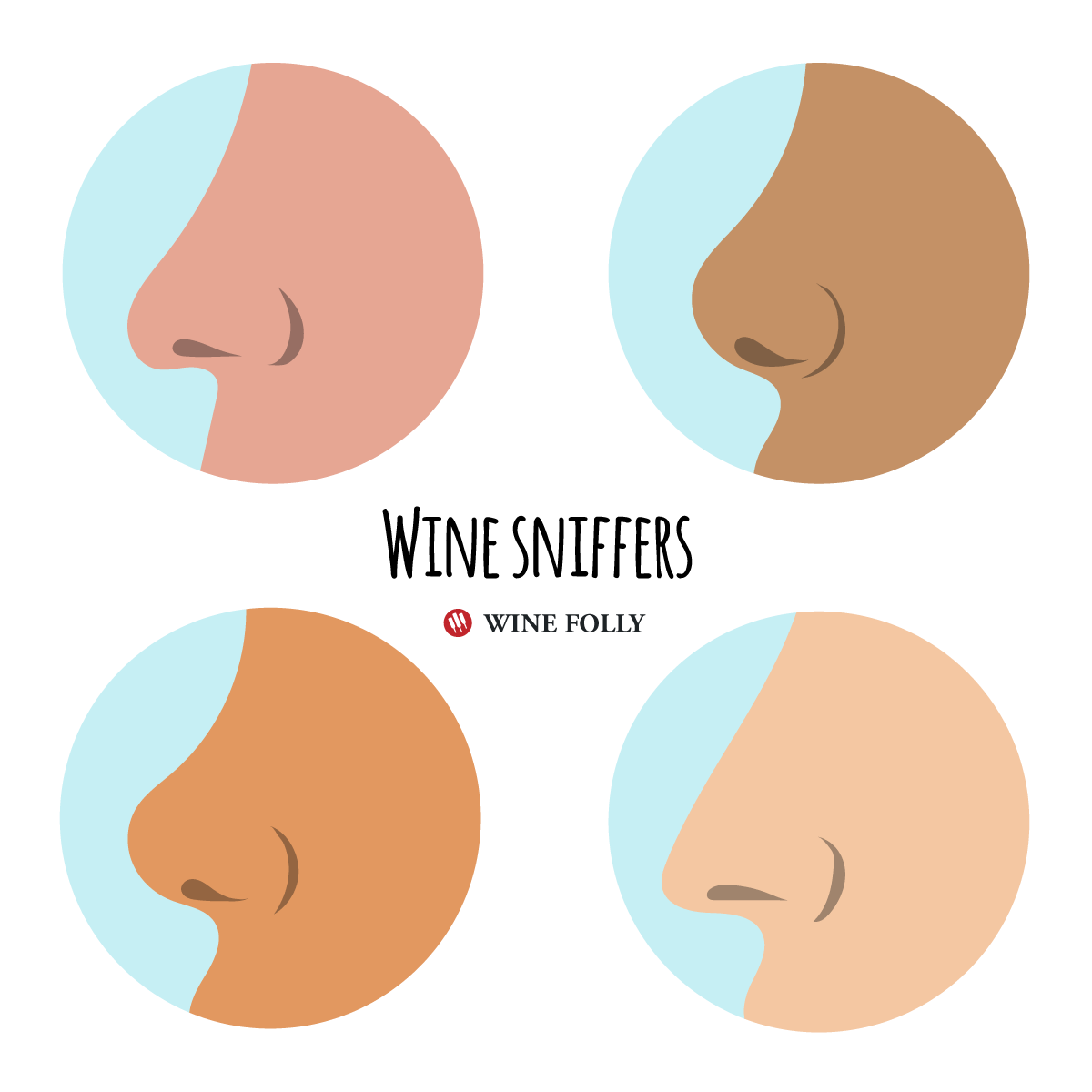
Differences in anatomy and brain processing explain why people pick out different aromas.
Each wine has a core set of aromas that many tasters recognize… (who aren’t anosmics).
This video is a great place to start with a glass of Pinot Noir.
NOTE: For those who think they have a poor sense of smell: I know a Master Sommelier with a below-average sniffer… So, don’t give up on your honker!
Get Out and Use Your Snout!
Next time you pick up a glass of wine, don’t drink it! (Well, at least not at first). Take your time to pick out 3–5 wine flavors BEFORE you taste them. That’s the secret.
That’s how you train your nose. Salut!